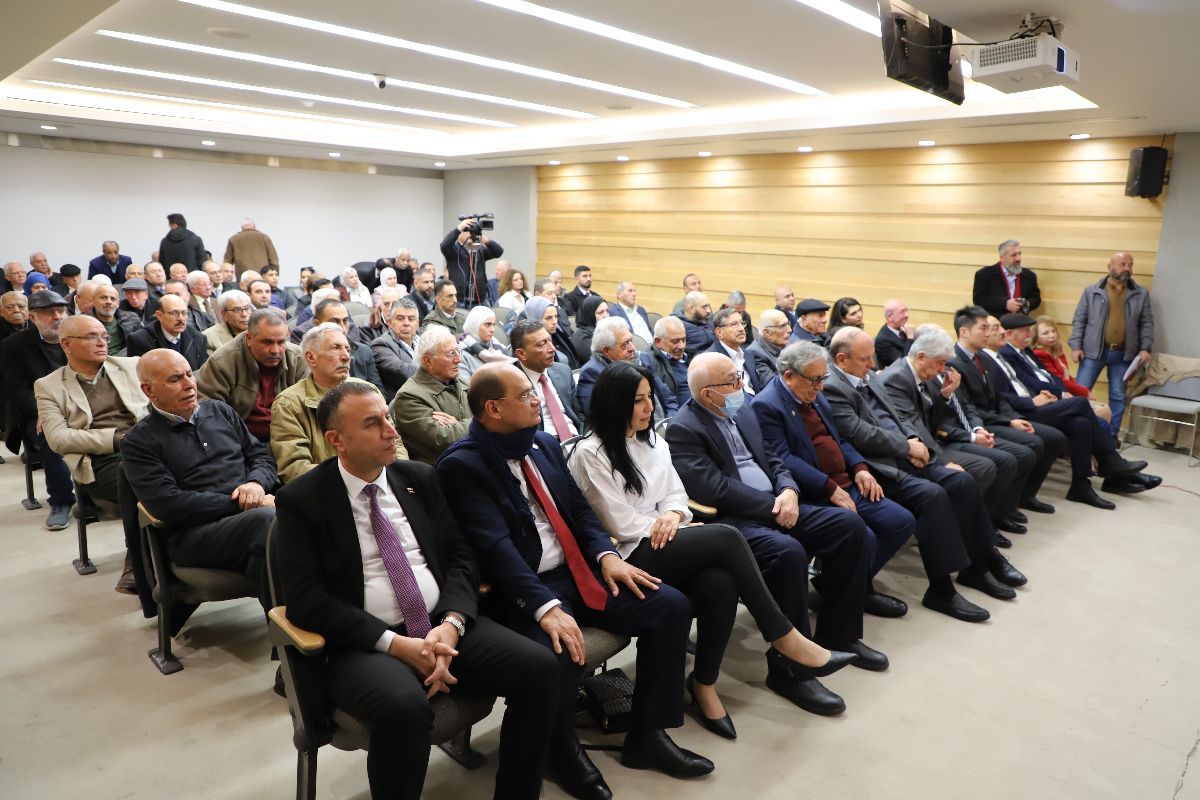
The Yasser Arafat Foundation marked the birth anniversary of “The Knight of Jerusalem,” Dr. Samir Saad Al-Din Ghosheh, on Thursday, January 8, 2026, at Al-Muntada Hall of the Yasser Arafat Museum.
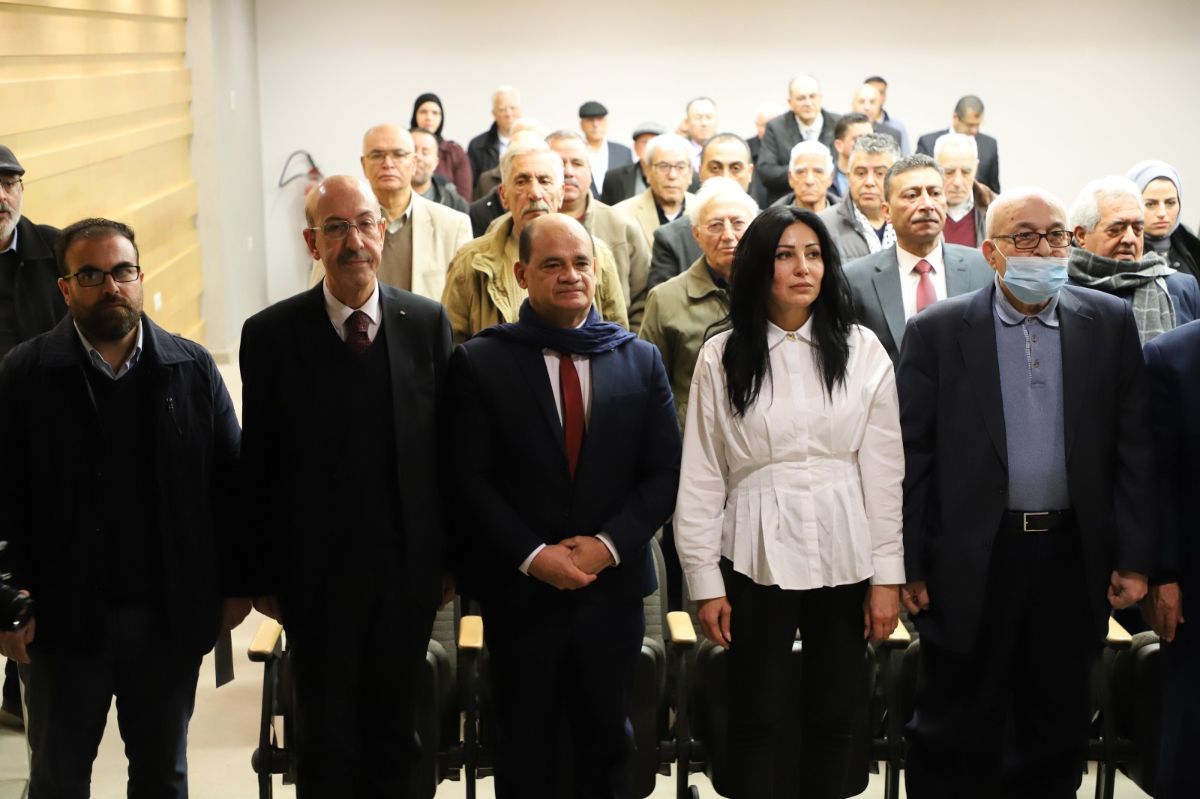
The event opened with the Palestinian national anthem, followed by a moment of silence and the recitation of Al-Fatiha in honor of the souls of Palestine’s martyrs and of the late Dr. Ghosheh, who passed away on August 3, 2009, after months of battling illness. The ceremony was attended by members of the Executive Committee of the Palestine Liberation Organization (PLO), the Central Committee of Fatah, members of the Palestinian National Council, diplomats, members of the Revolutionary Council, as well as prominent public figures, writers, and activists.
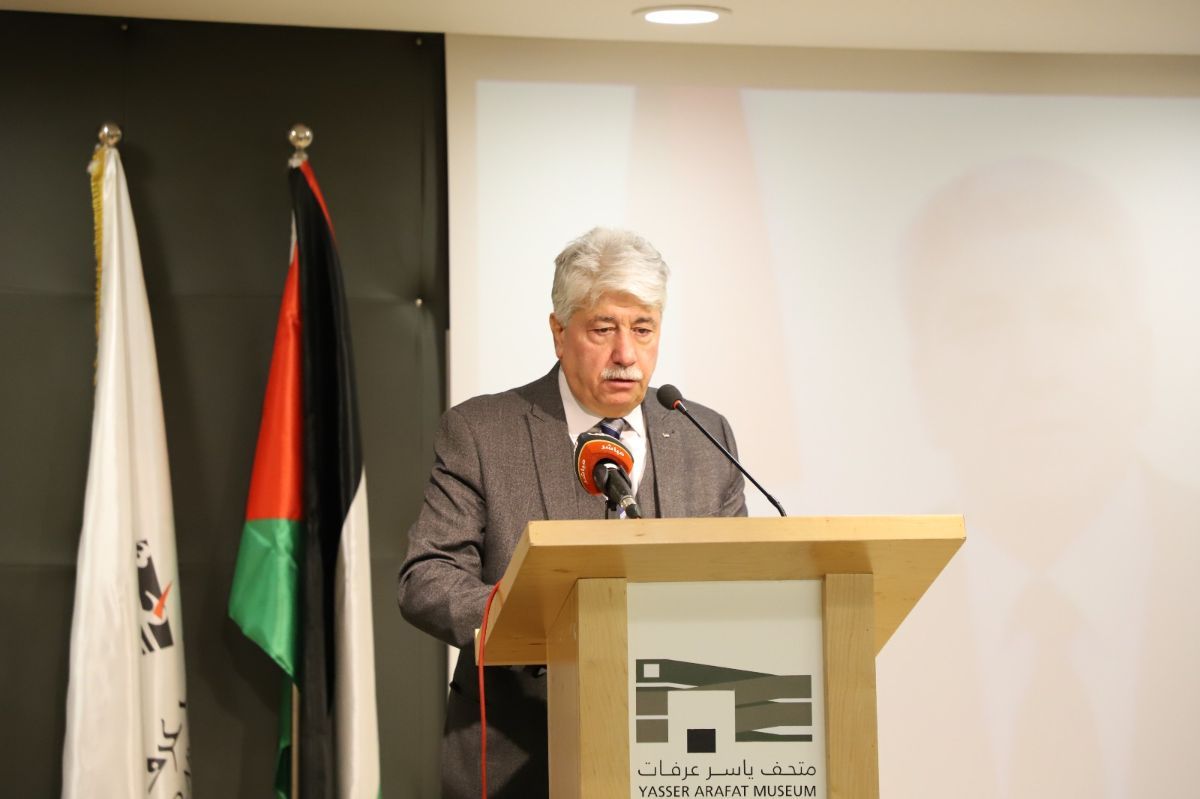
In his address on behalf of the Yasser Arafat Foundation, Dr. Ahmad Soboh, Chairman of the Board, said:
“From this hall, near the tomb of the founding president and his final trench, the Foundation commemorates the birth of Jerusalemite Dr. Samir Ghosheh, the humane physician, Arab nationalist, one of the founders of the Palestinian Popular Struggle Front, launched on July 15, 1967, a member of the PLO Executive Committee responsible for the Jerusalem portfolio, and the first Minister of Labor in the Palestinian government.”
Dr. Soboh also recalled aspects of Dr. Ghosheh’s human character, noting that he lived the Nakba in all its details in the alleys of Jerusalem, moved to Sheikh Jarrah, then to Jordan, and later to Damascus where he studied dentistry. He eventually returned to Jordan as a doctor for the poor and an Arab nationalist with a clear vision and message.
Dr. Soboh emphasized the importance of the Foundation’s program “In the National Memory– Companions on the Path,” which for the fifth consecutive year continues to commemorate the birth anniversaries of comrades in struggle as a source of hope for current generations. The program honors those who have passed by preserving their memory from oblivion and strengthening the Palestinian national narrative. He noted that the program will continue this year to honor another group of martyred leaders.
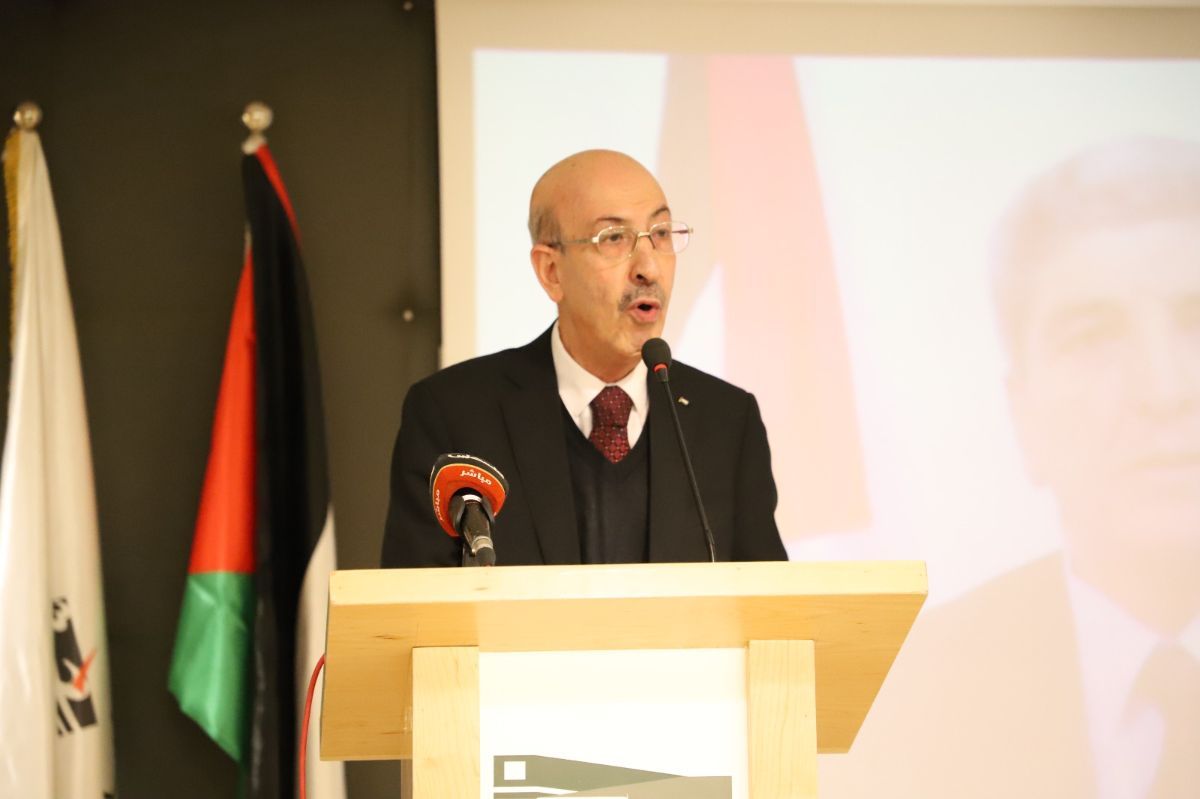
For his part, Dr. Ahmad Majdalani, Secretary-General of the Palestinian Popular Struggle Front and member of the PLO Executive Committee, said: “This gathering is not merely a ceremonial tribute or an emotional remembrance of a departed fighter. It is an act of awareness, loyalty, and national responsibility through which we revisit a rich struggle experience and revive a political, intellectual, and militant school
that still has much to offer in times of confusion, division, and the comprehensive targeting of our national cause.”
Majdalani noted that Dr. Samir Ghosheh embodied a model of leadership that combined intellectual clarity with political steadfastness, Arab nationalist commitment with revolutionary realism. He was among the few who early on understood that the Palestinian cause cannot be reduced to a humanitarian or relief issue, but is fundamentally a national liberation struggle and a historical confrontation with a settler-colonial project.
In this context, Majdalani recalled the deep political and militant relationship between Dr. Samir Ghosheh and the iconic leader, martyr Yasser Arafat, a relationship of comradeship, constant dialogue, responsible disagreement when necessary, and firm strategic agreement on the essence of the Palestinian national project. Dr. Ghosheh never fell into the trap of engaging in parallel or alternative frameworks.
He added that both leaders shared a firm belief that the Palestine Liberation Organization is the inclusive national home and the political and moral representative of the Palestinian people at home and in the
diaspora, and that safeguarding it and defending the independence of its national decision is a red line that must not be crossed. Their dialogue, he said, was based on mutual respect, responsible disagreement, and a shared commitment to national unity, even during critical moments in the history of the contemporary Palestinian revolution.
Majdalani stressed that the relationship between the two leaders was not one of left versus right, or opposition versus leadership, but a partnership in the national project, differing in methods yet united in goals: liberation of the land, the return of refugees, and the establishment of a fully sovereign Palestinian state with Jerusalem as its capital.
He highlighted the importance of the day’s event, noting that the Palestinian scene is in urgent need of restoring a unifying spirit capable of managing differences within a comprehensive national framework, away from division and fragmentation.
Majdalani also paid tribute to the Yasser Arafat Foundation for its vital national role in preserving collective memory, honoring leaders and freedom fighters, and safeguarding the Palestinian narrative against
attempts at erasure and distortion, stressing that the battle over memory is no less important than the battle over land, particularly through its program “In the National Memory… Companions on the Path.”
The event concluded with the screening of a documentary produced by the Foundation titled “The Knight of Jerusalem.”