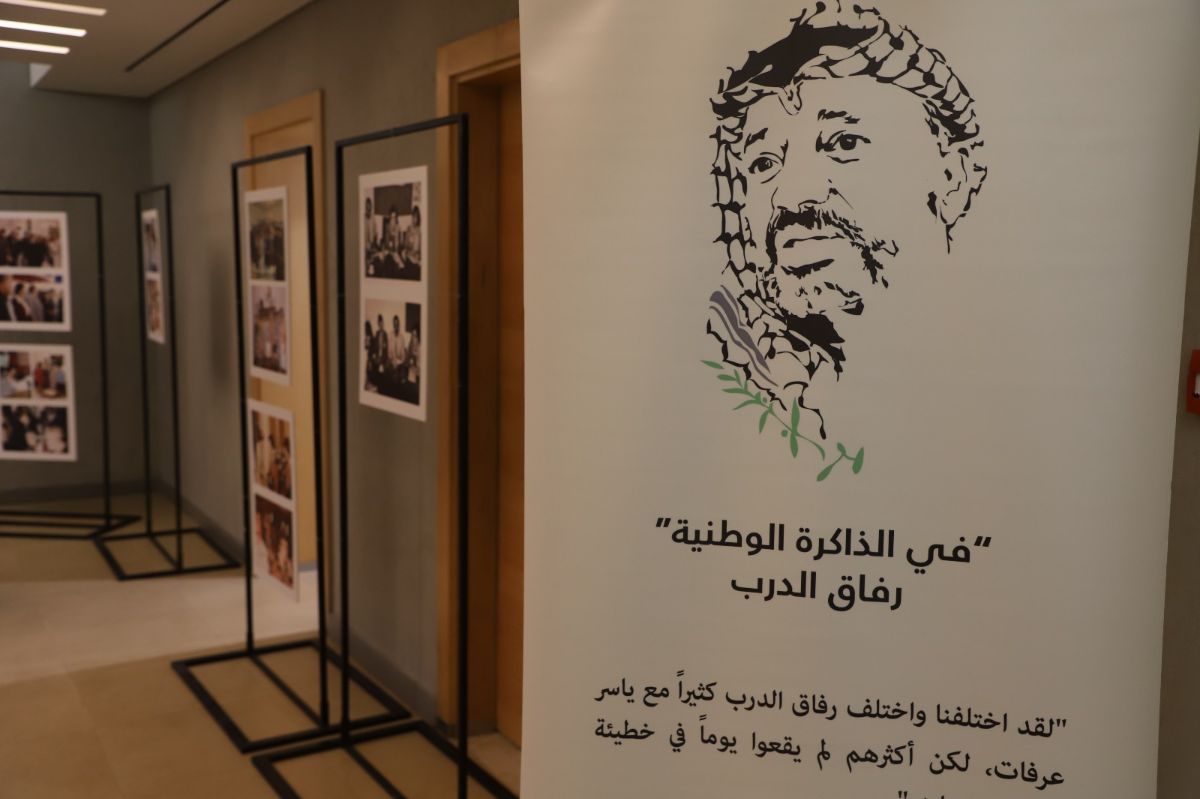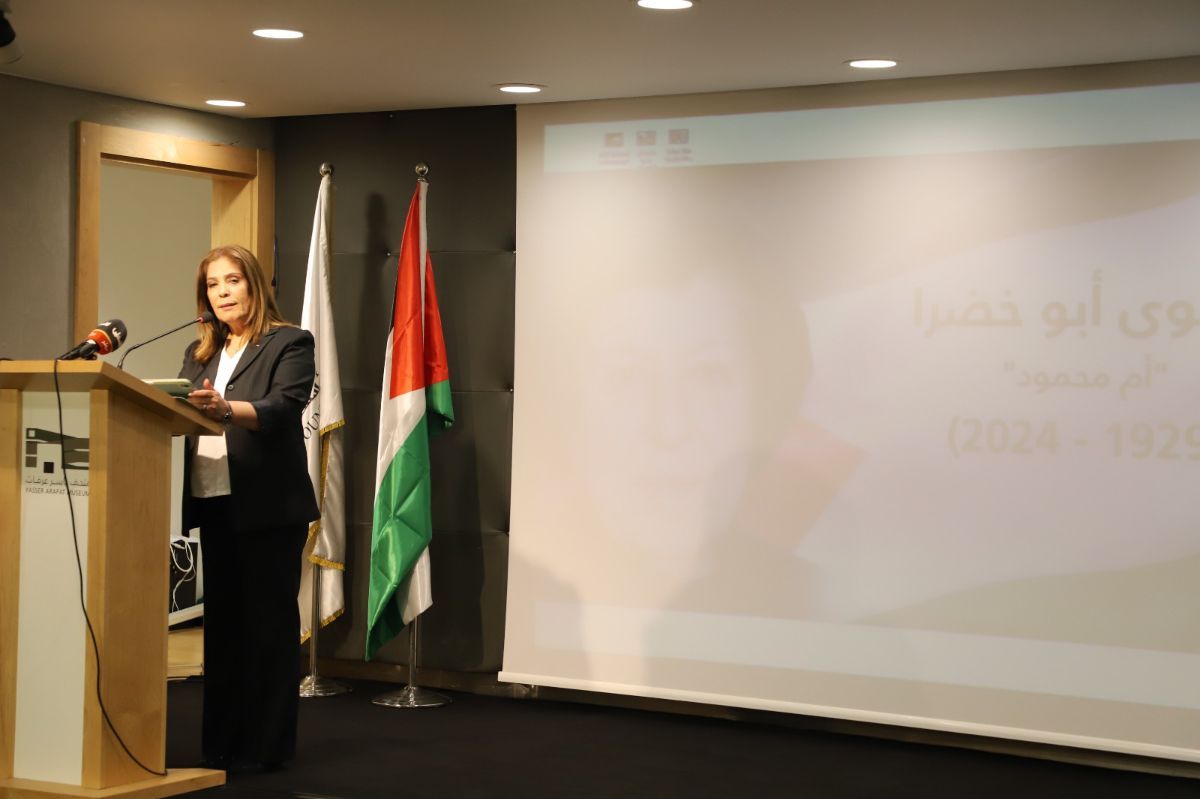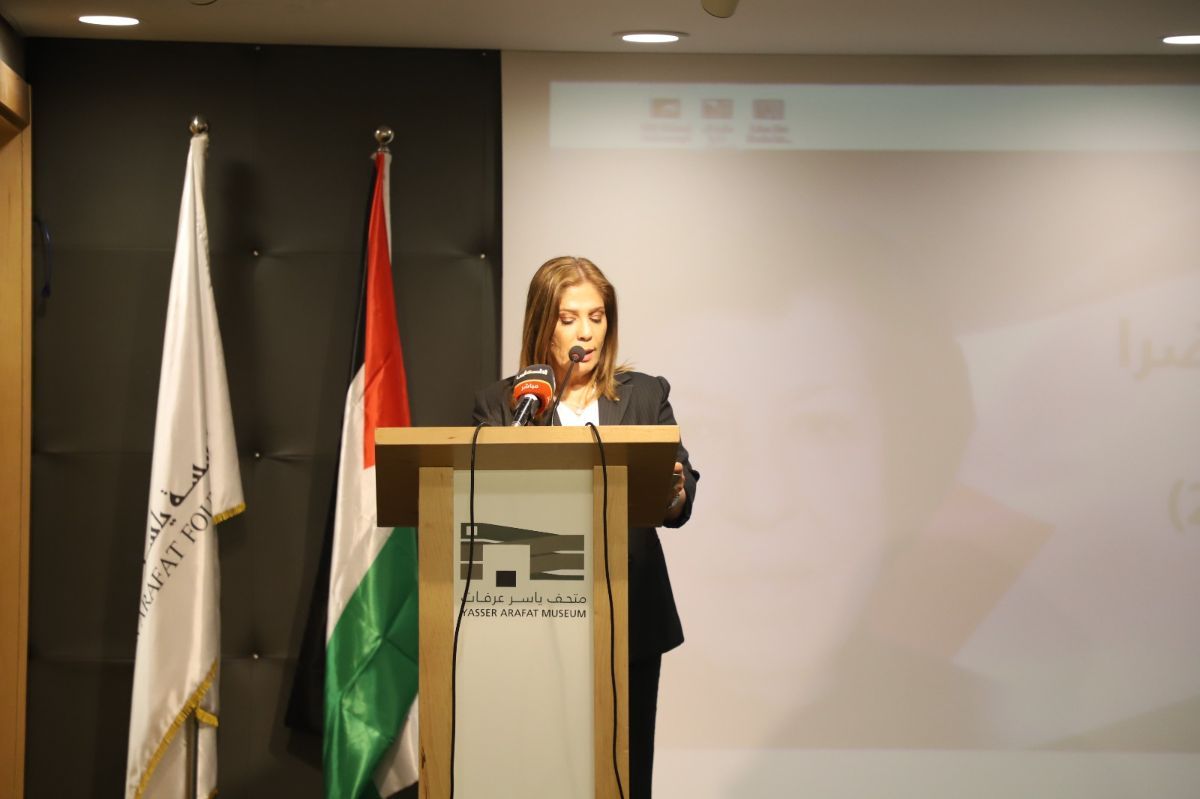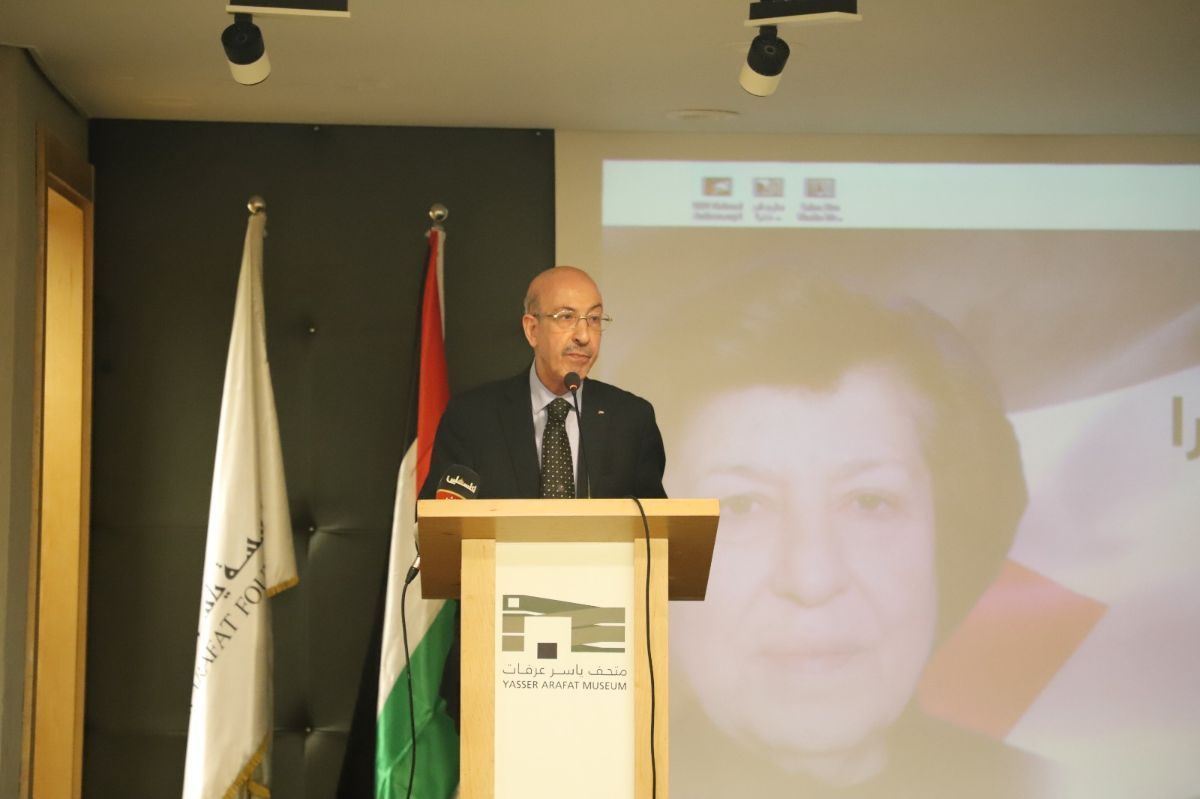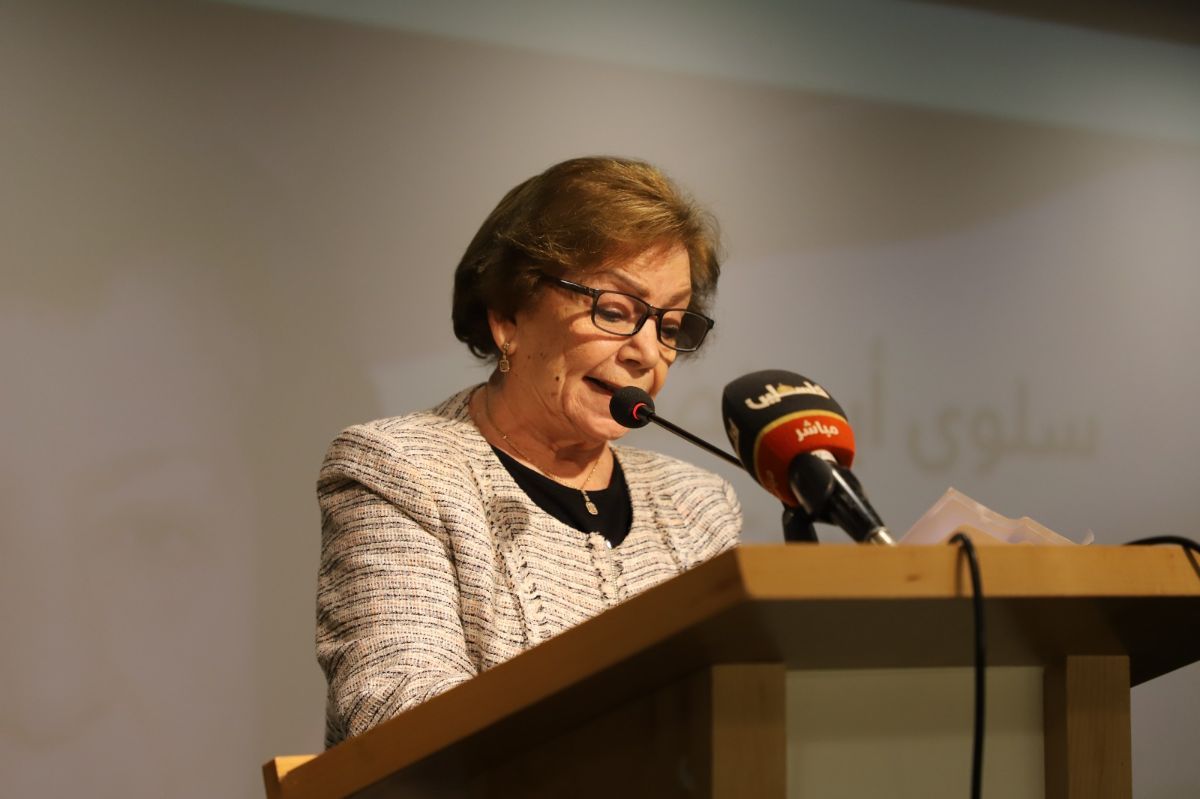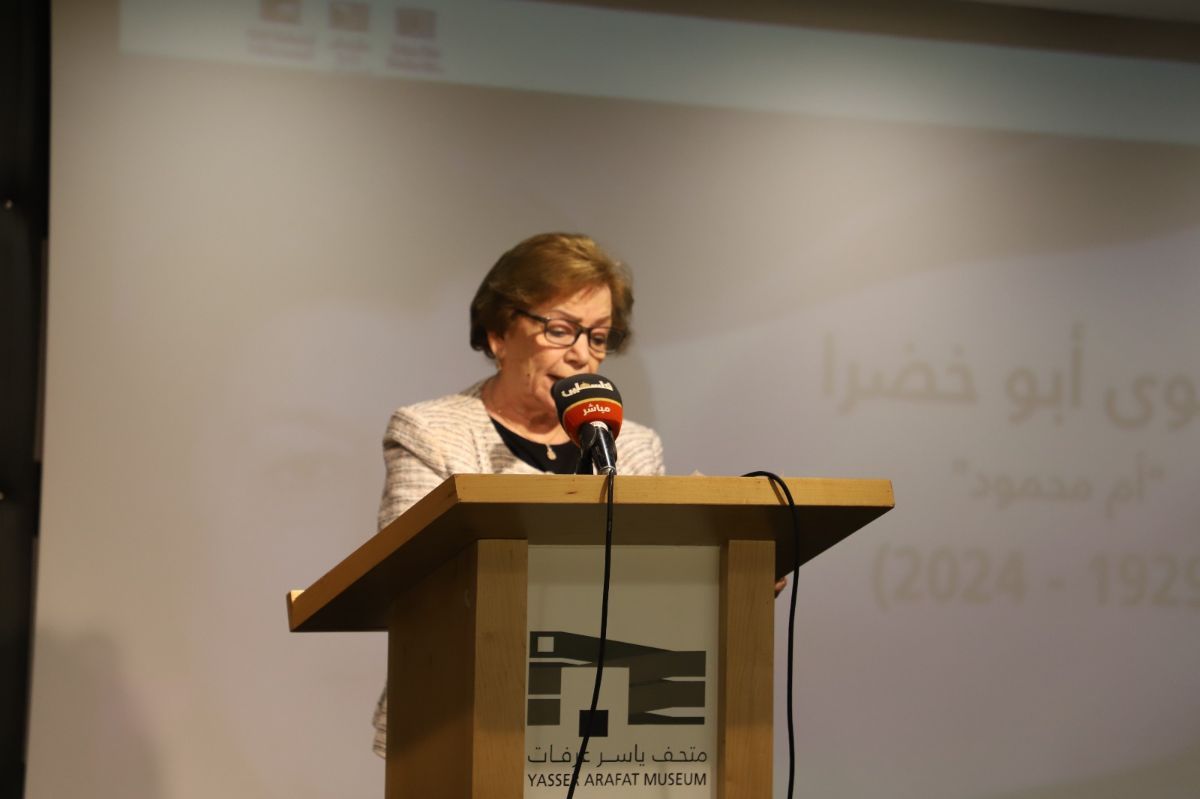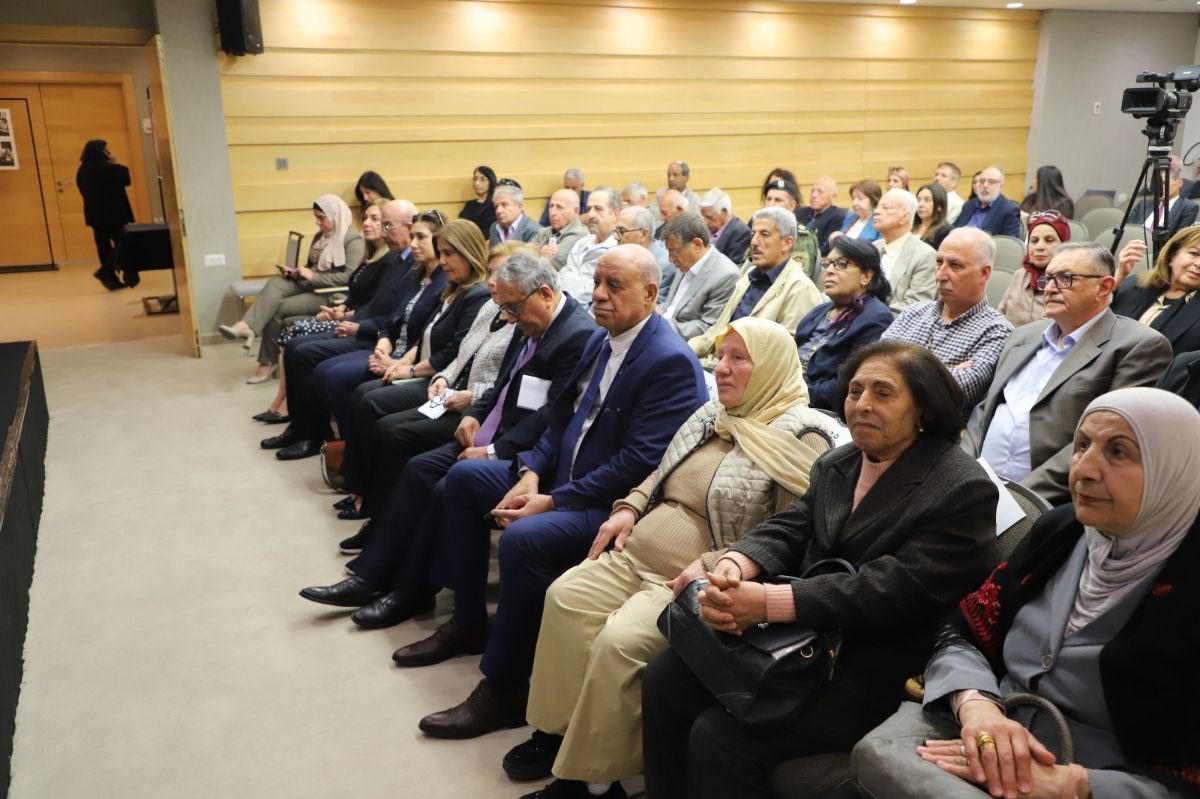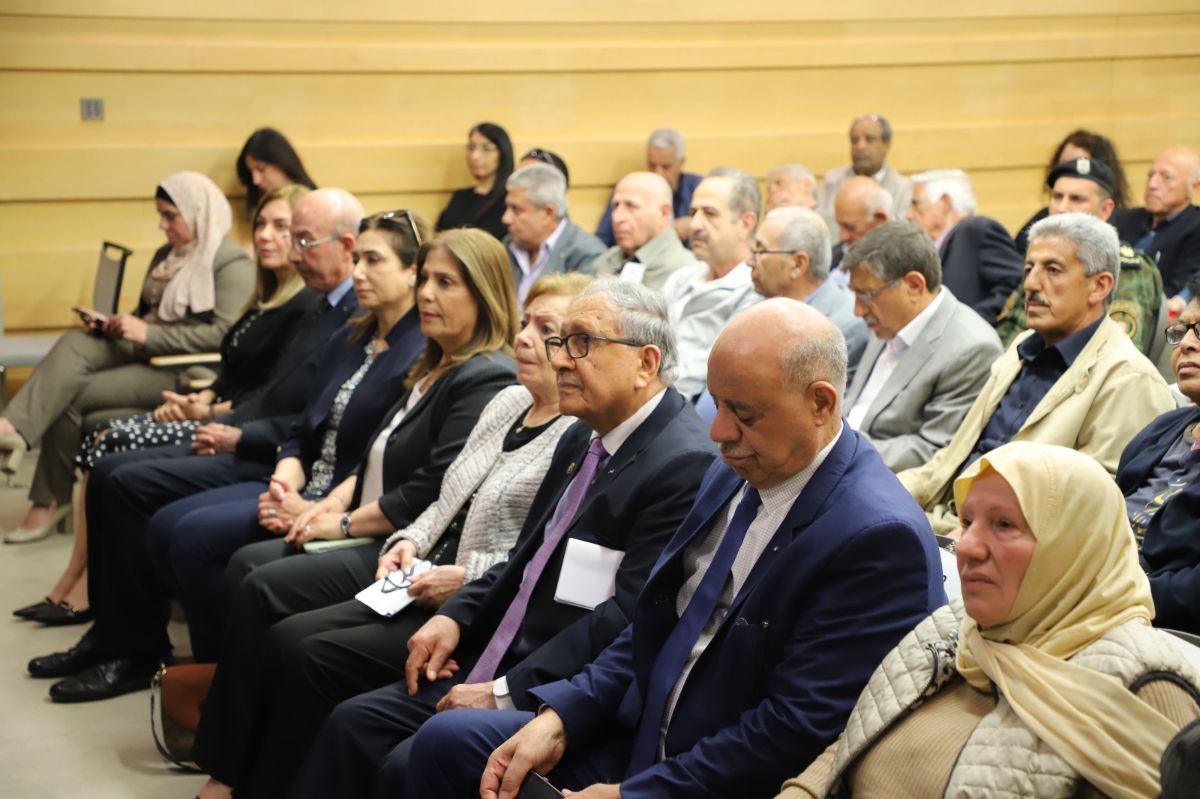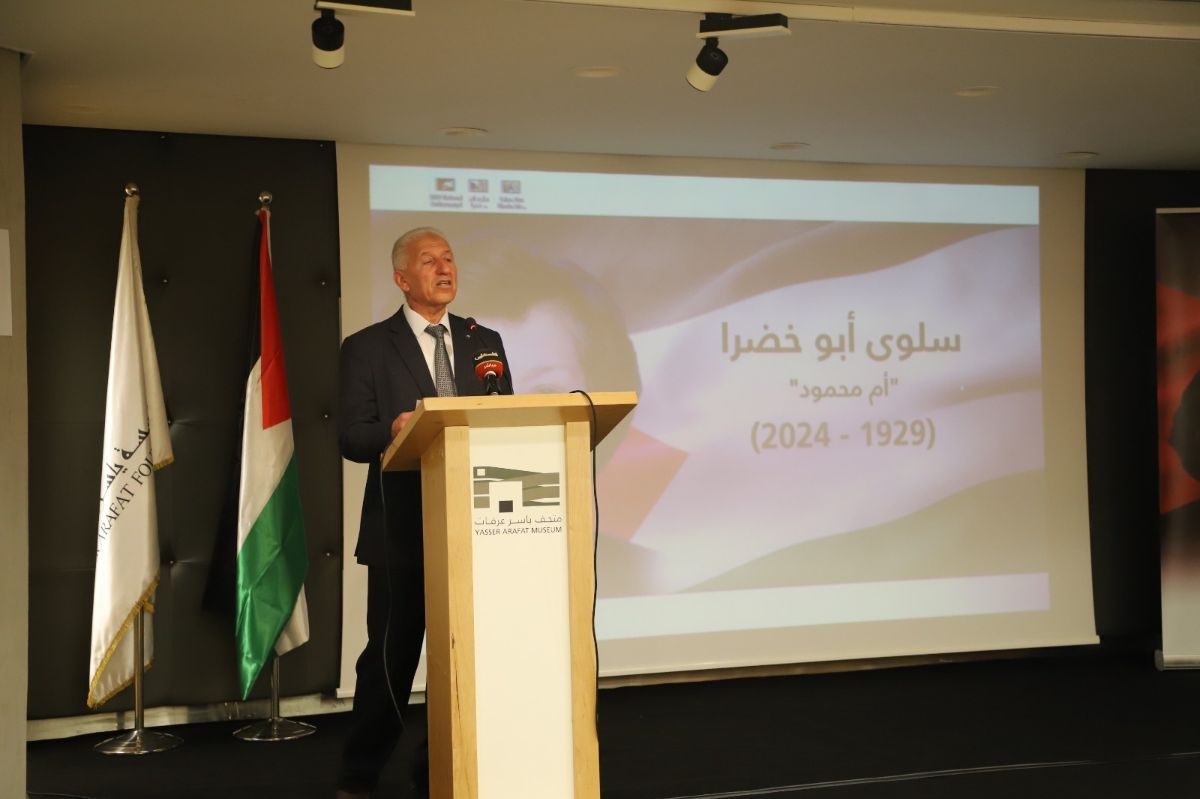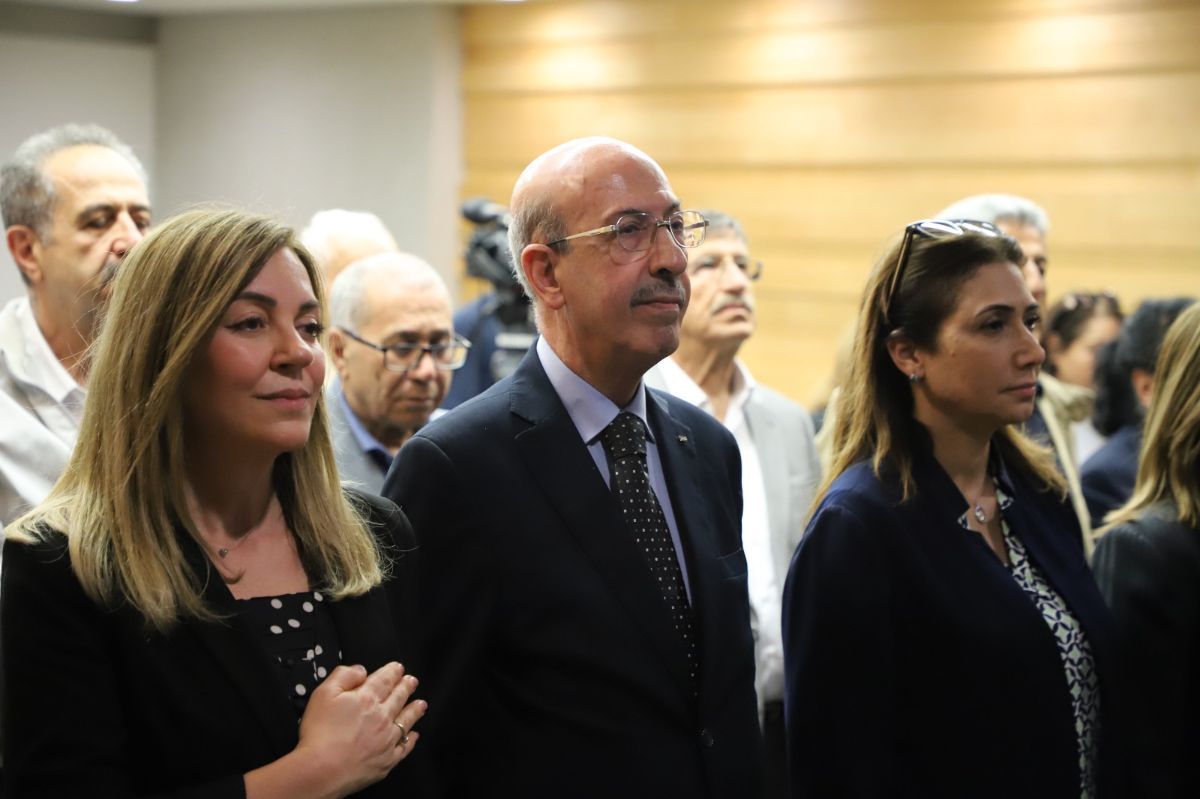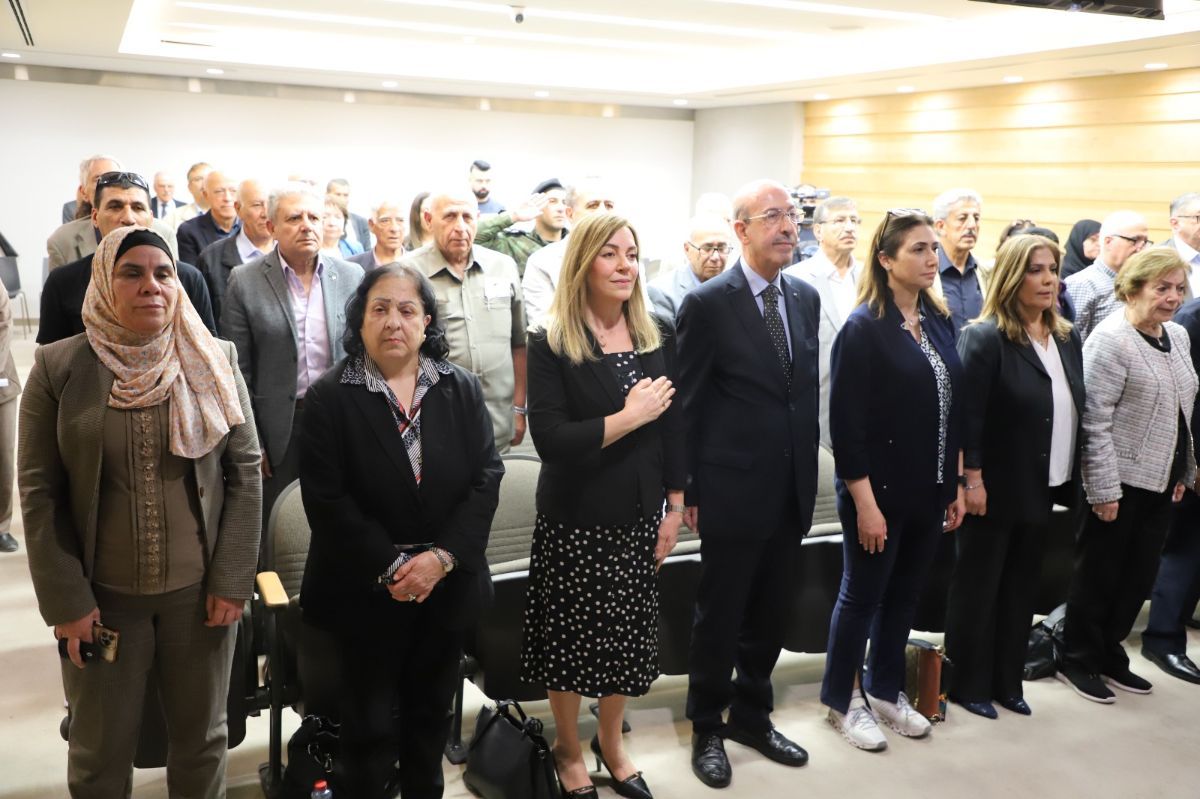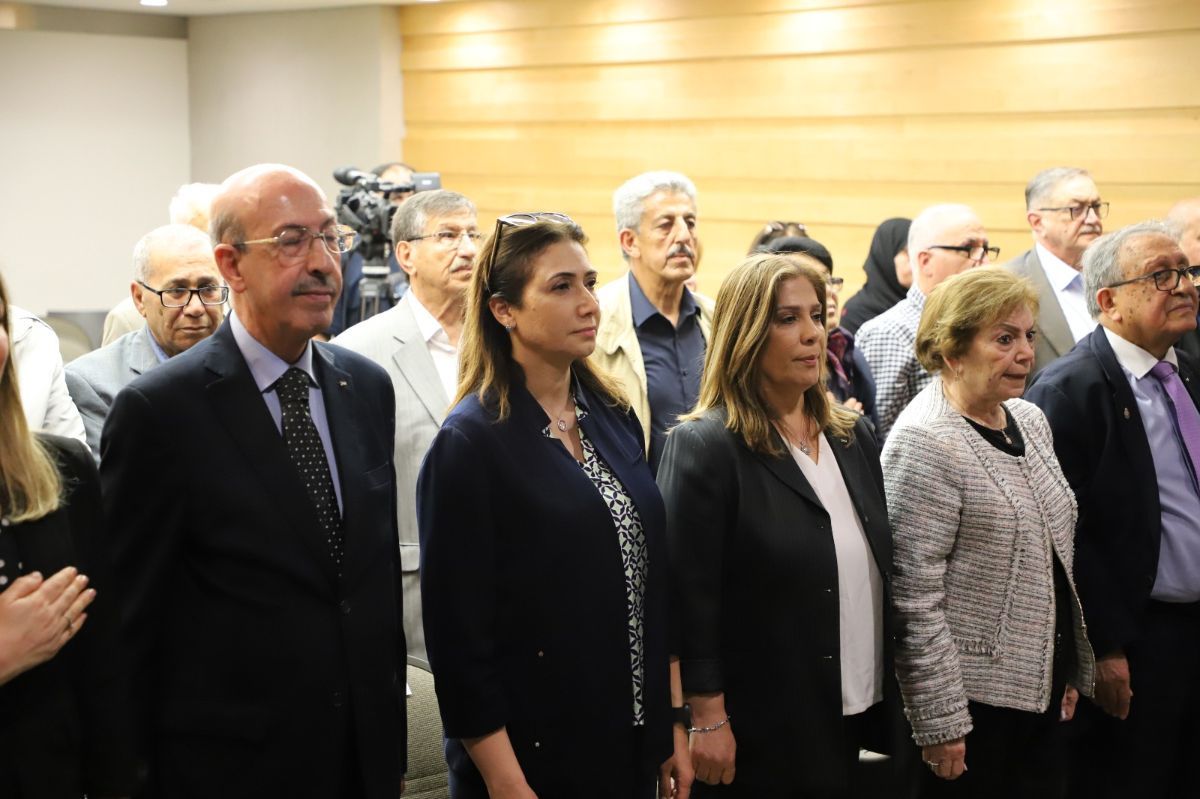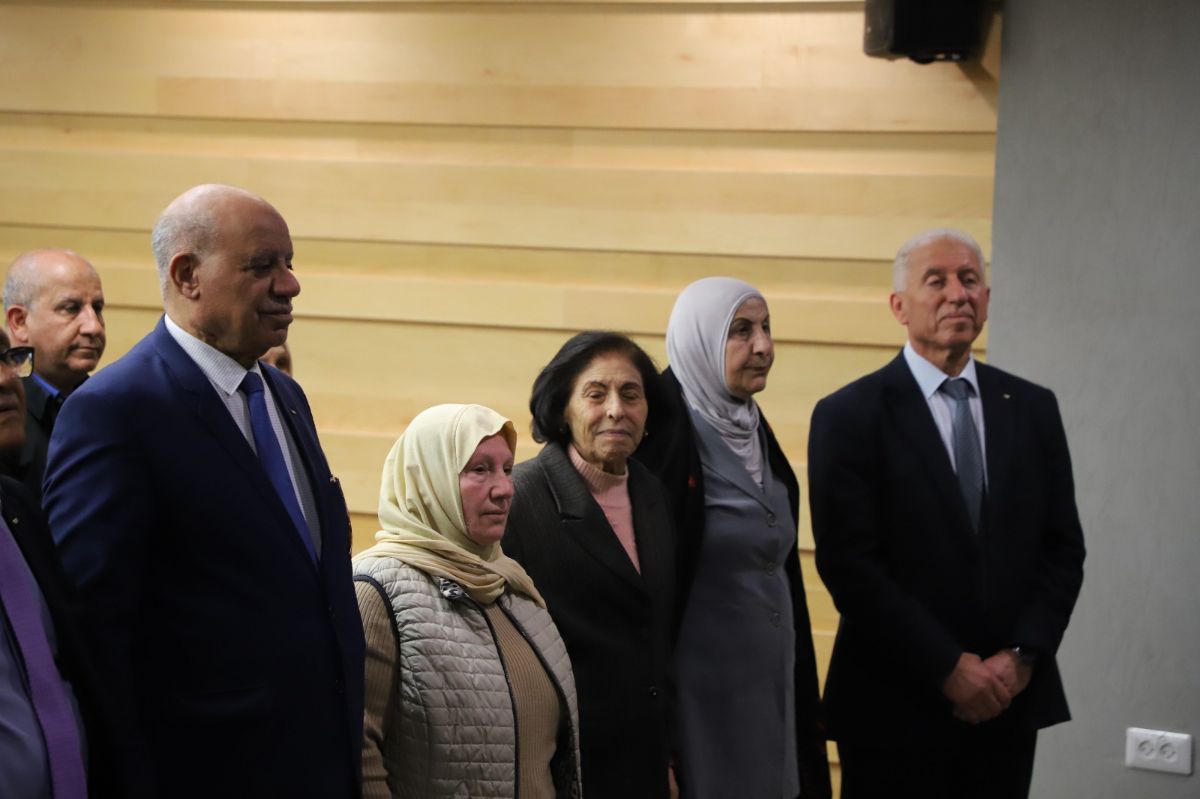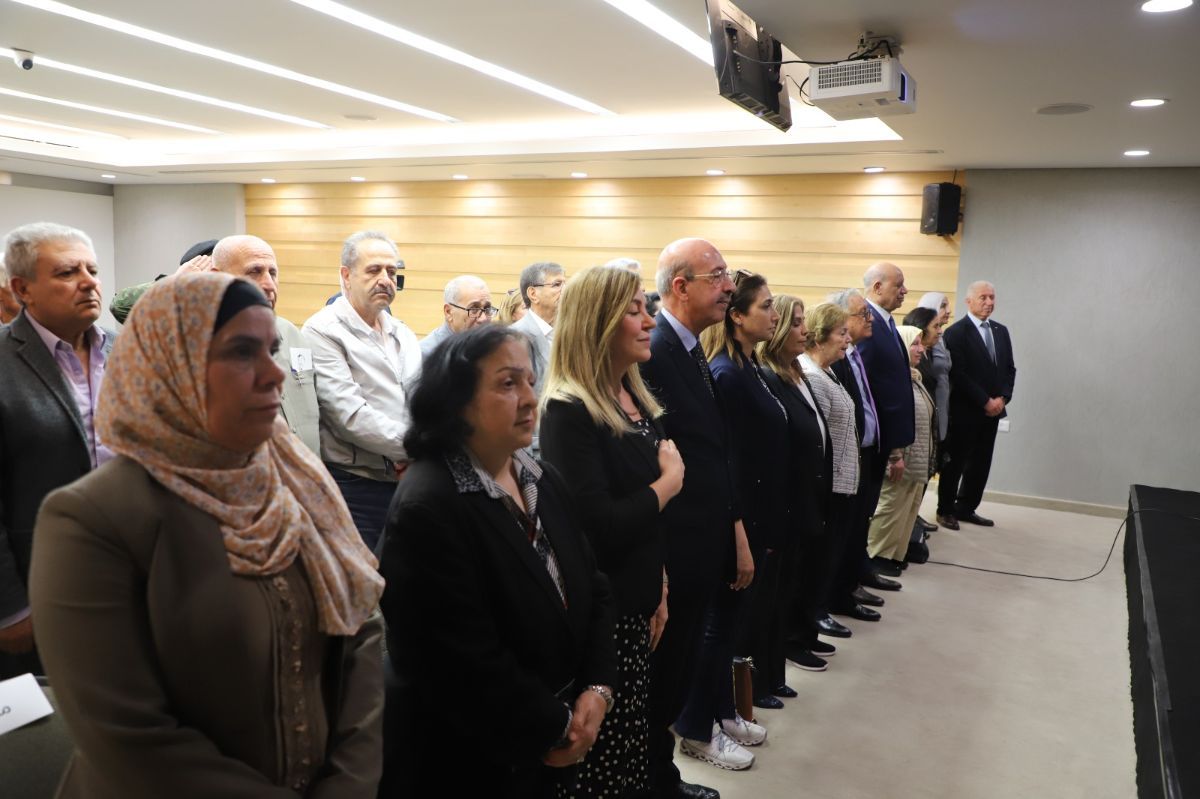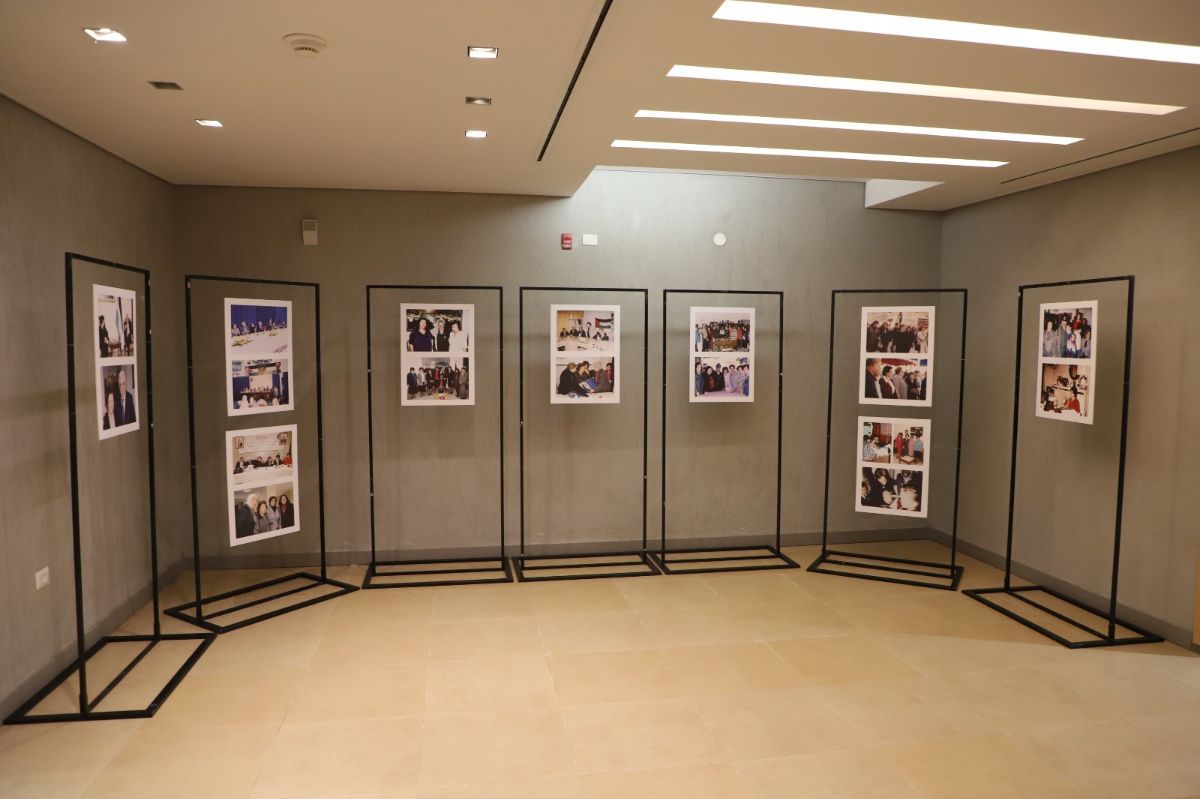
The Yasser Arafat Foundation commemorated the birth anniversary of veteran Palestinian activist Salwa Abu Khadra (“Um Mahmoud”) during a ceremony held on April 29, 2026, at the Yasser Arafat Museum Al-Muntada Hall in Ramallah. The event was attended by senior Palestinian political figures, diplomats, writers, journalists, and civil society representatives.
The ceremony opened with the Palestinian national anthem and tributes to Palestinian martyrs and to Abu Khadra, whose legacy was celebrated as one of the pioneering figures in Palestinian national and women’s activism.
Speaking on behalf of the foundation, Chairman Dr. Ahmad Soboh described Abu Khadra as “a pure and inspiring model of Palestinian women’s struggle,” highlighting her decades-long role in political activism, education, and humanitarian work. He praised her contributions to founding Dar Al-Hanan orphanage in Kuwait in 1963 and her role in establishing the General Union of Palestinian Women. Soboh also recalled her early membership in the Fatah Movement and her longstanding partnership with late Palestinian leader Yasser Arafat in the national struggle.
In her remarks, Intisar Al-Wazir, head of the General Union of Palestinian Women, described Abu Khadra as a “symbol of Palestinian women’s resistance and resilience.” She said Abu Khadra transformed the experience of exile after the 1948 Nakba into a lifelong mission of political and social activism, defending Palestinian rights across regional and international forums.
Minister of Women’s Affairs Mona Al-Khalili praised the Yasser Arafat Foundation for preserving the memory of Palestinian national figures and reinforcing the Palestinian narrative through such commemorative events. She described Abu Khadra as part of a generation of exceptional Palestinian women leaders who shaped the national movement and championed women’s political participation and equal rights.
Family members also reflected on Abu Khadra’s personal and national legacy. Her grandson, Adnan Mahmoud Abu Khadra, recounted her journey from her birthplace in Jaffa in 1929 through displacement after the 1948 Nakba, and later activism across Damascus, Beirut, Gaza, Cairo, and Kuwait. He highlighted her lifelong dedication to preserving Palestinian identity and passing its memory to younger generations.
The event concluded with renewed calls to uphold the principles Abu Khadra devoted her life to: Palestinian self-determination, women’s empowerment, and the preservation of Palestinian national memory.