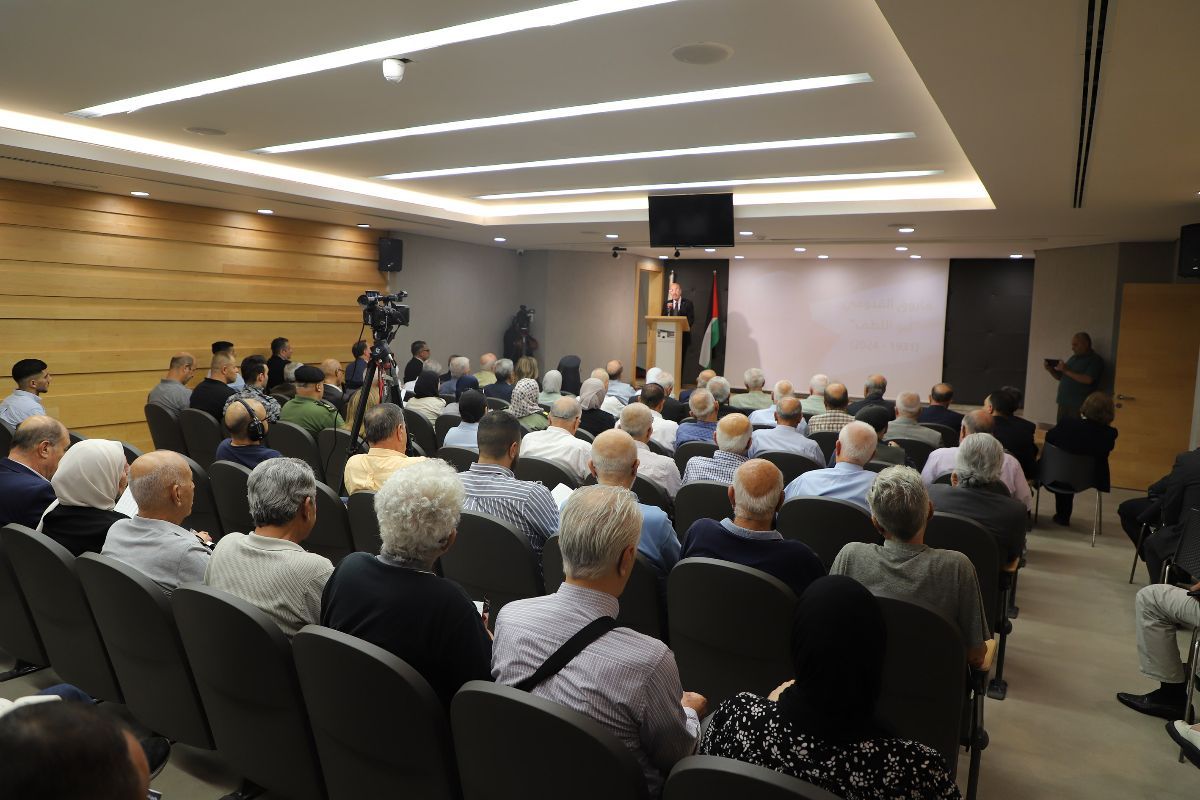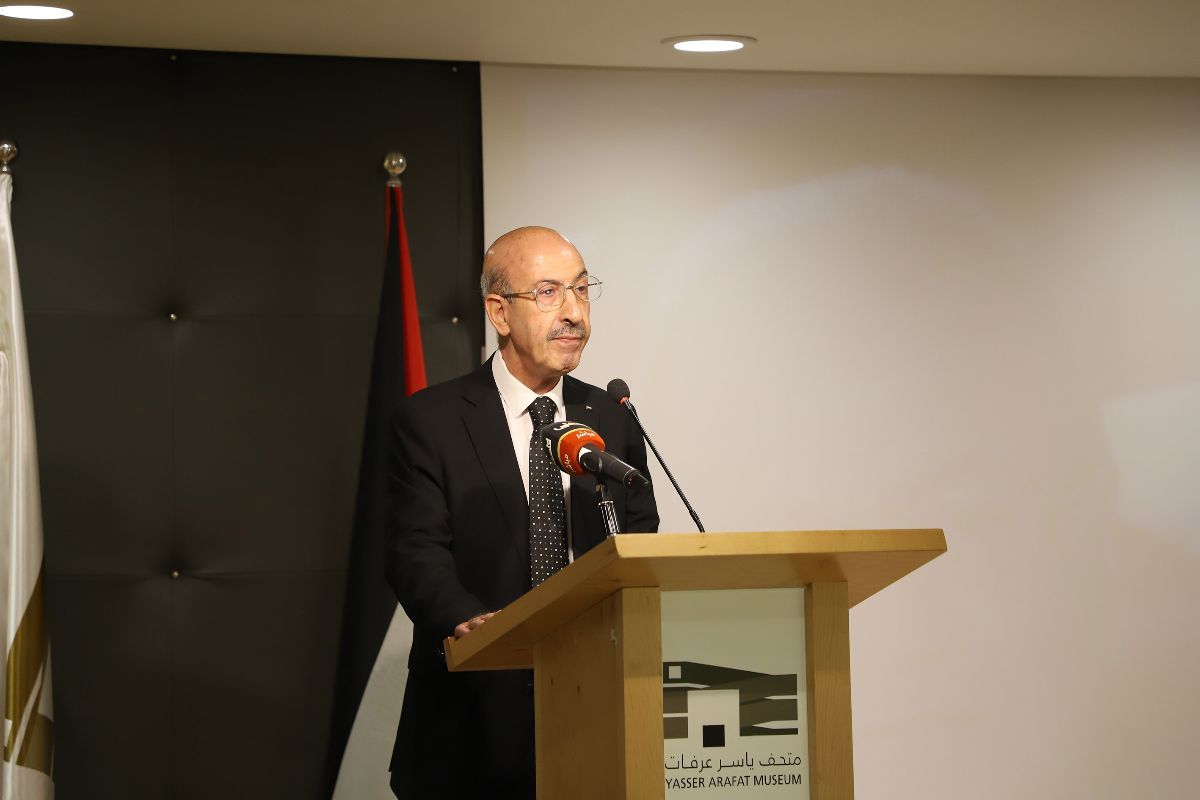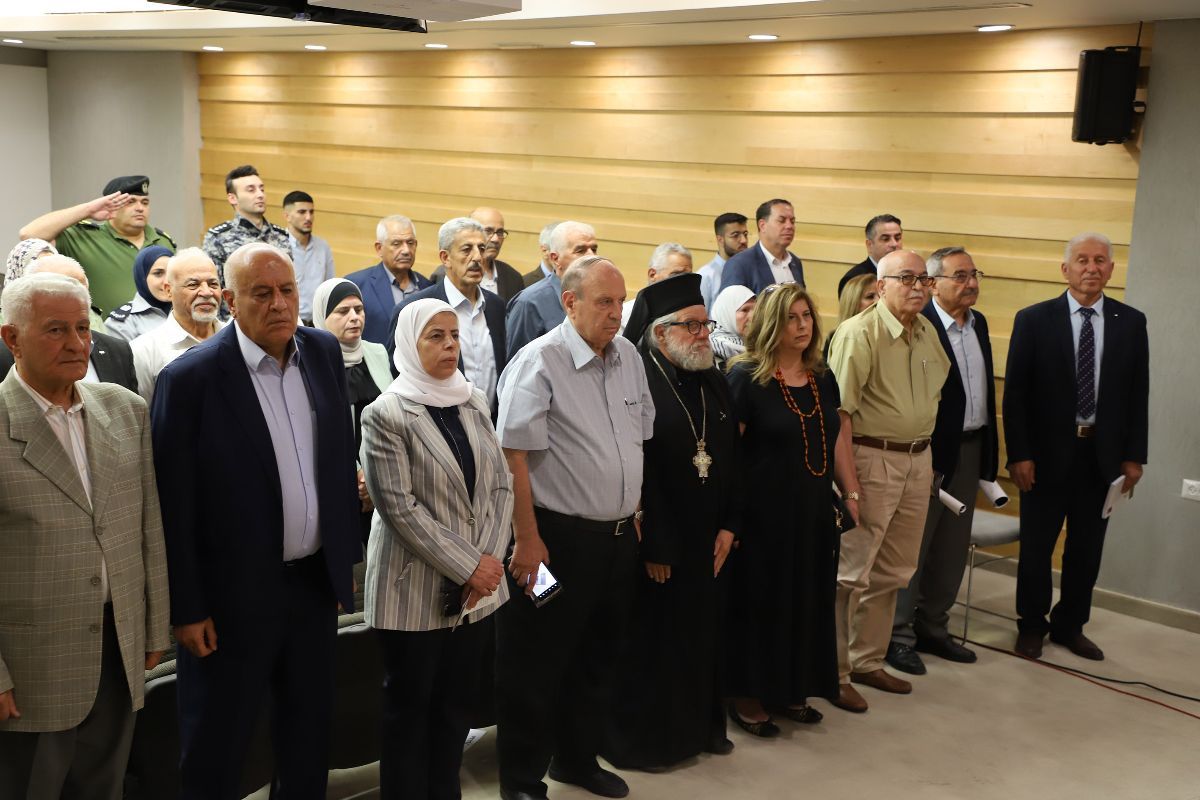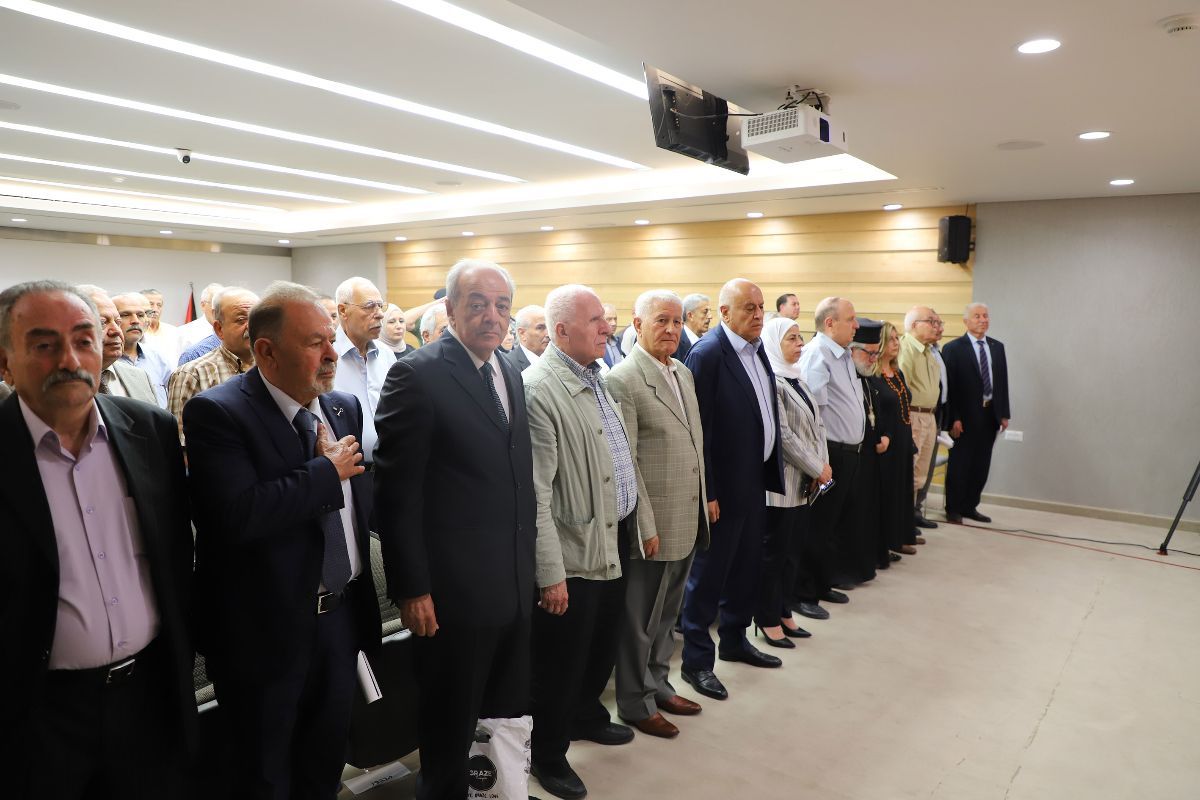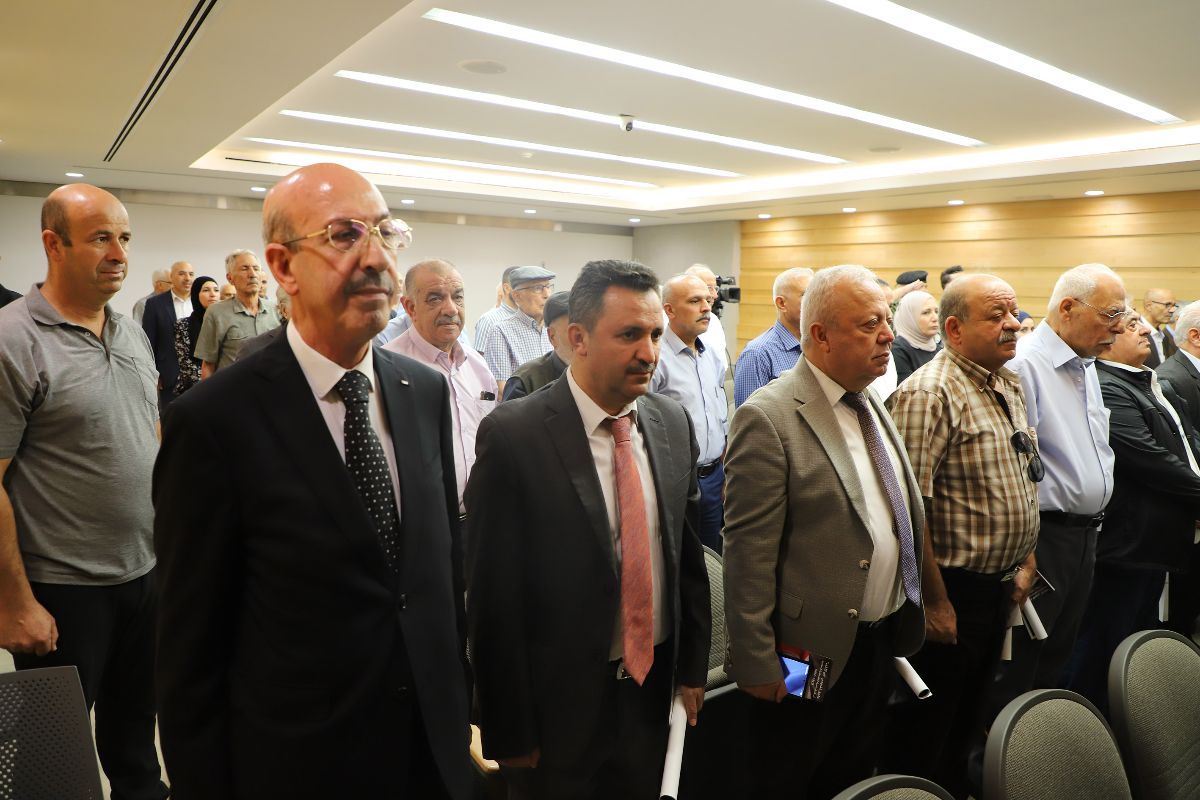
On Monday, August 18, 2025, the Yasser Arafat Foundation commemorated the birthday of Farouk Qaddoumi, known as "Abu al-Lutf," the father of Palestinian modern diplomacy, at Al-Muntada Hall in the Yasser Arafat Museum.
The event began with the Palestinian national anthem, followed by a moment of silence and the recitation of Al-Fatiha in honor of the late President Yasser Arafat and his comrade Abu al-Lutf, who passed away on August 22, 2024, along with all Palestinian martyrs.
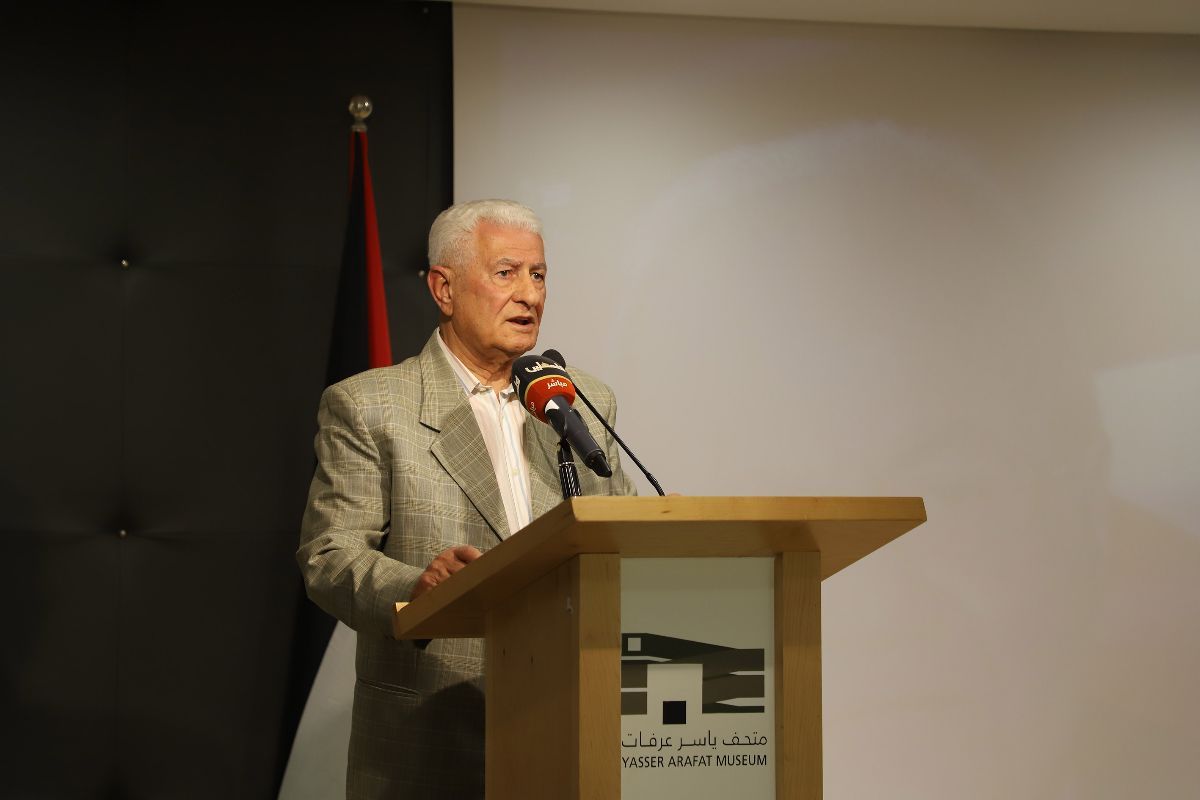
In his speech, Dr. Ahmad Soboh, Chairman of the Yasser Arafat Foundation, stated: "From Al-Muntada Hall, near the tomb of ourfounding president and his final resting place, the Foundation commemorates the birthday of Abu al-Lutf, the father of Palestinian modern diplomacy. For the fourth consecutive year, the Foundation has honored 16 Palestinian martyrs as part of the ‘Companions of the Path’ program. This program aims to ensure that the history of these leaders serves as a model for our children and grandchildren, directing a salute to our people wherever they are."
Dr. Soboh further highlighted Abu al-Lutf’s journey, starting from his hometown of Jinsafut and traveling through Yafa, Nablus, Amman, Saudi Arabia, Cairo, Libya, and Kuwait, before dedicating himself to the cause in Jordan.
He mentioned that Abu al-Lutf was deeply influenced by Pan-Arab thought, associating with prominent figures like Kamal Saadeddine, Abdullah al-Rimawi, and Ahmed al-Sabbah. Dr. Soboh also recalled how Abu al-Lutf met with prominent figures like Abu Ammar, Abu Jihad, Abu Iyad, Abu Al-Adib, and Abu Mazen during his studies in Cairo, and later during his work in Kuwait's Ministry of Health.
Dr. Soboh honored Abu al-Lutf for his role in founding and serving as a member of Fatah's Central Committee since 1965, and for being a lifelong member after the 7th congress of Fatah. He recalled the pivotal moments in Abu al-Lutf’s life, including his involvement in the struggle for the release of Yasser Arafat and Abu Jihad in 1966, his participation in the Battle of Karameh, and his attendance at major summits like the 2002 Beirut Summit and the 2003 Kuala Lumpur Non-Aligned Movement Summit.
Dr. Soboh concluded by reflecting on his personal experiences working with Abu al-Lutf, first in 1981 at the UN General Assembly, and later in South Africa, Colombia, Malaysia, Mexico, and Brazil, where he served as the Palestinian Ambassador.
Abbas Zaki, a member of Fatah's Central Committee, praised the Yasser Arafat Foundation for embodying the ideals that Yasser Arafat would have cherished had he been alive, particularly in ensuring that the legacy of the late Palestinian leaders is honored. He remarked on how the Foundation’s documentary film about Abu al-Lutf provided a comprehensive portrayal of his life and contributions.
Zaki emphasized that Abu al-Lutf was not just a leader of Palestine but a school of thought and a pioneer in defending the Palestinian cause, building bridges for Palestine’s future. He also noted Abu al-Lutf’s critical role in shaping Fatah's principles and his significant impact on Palestinian student and labor unions. He celebrated Abu al-Lutf’s commitment to national integrity over personal leadership privileges, highlighting his connection to the people and his deep Palestinian roots.
Zaki concluded by noting that Abu al-Lutf played a significant role in national reconciliation, believing that unity was essential for achieving the Palestinian national goals. He expressed pride in having such leaders as Abu al-Lutf, Abu Ammar, Abu Jihad, Abu Iyad, and others, who provided the foundation for the Palestinian cause’s survival and resilience.
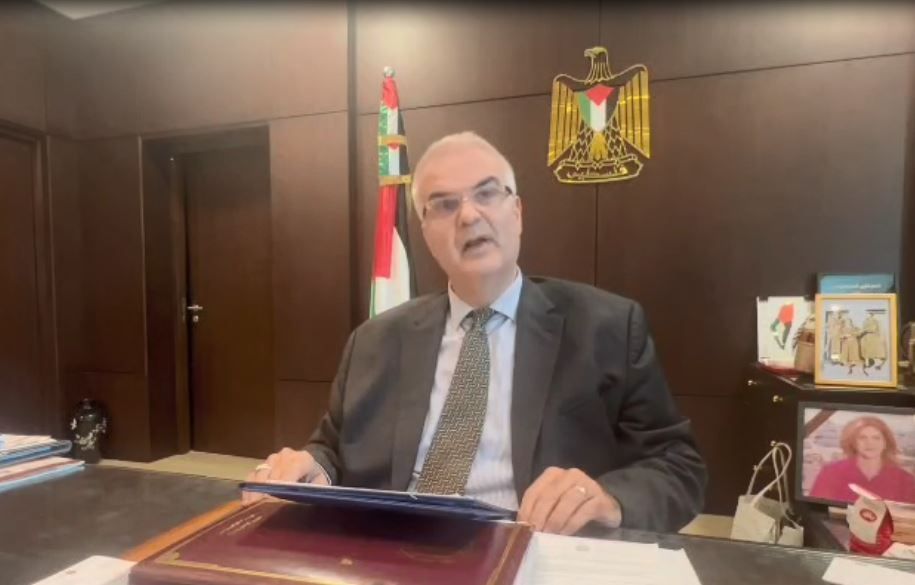
Dr. Rami Qaddoumi, son of Abu al-Lutf and Palestinian Ambassador to Tunisia, delivered a heartfelt tribute on behalf of the family, beginning with a prayer for the martyrs of Gaza and Palestine. He described his father as more than just a parent, calling him an embodiment of Palestine itself — a living symbol of the Palestinian dream that instilled fear in the enemy with his calm yet determined presence.
Dr. Rami shared his father’s journey, from his early service in the Jordanian army and his work with Aramco in Saudi Arabia, to his pivotal role in the Palestinian revolution alongside Yasser Arafat, Khalil al-Wazir, and Salah Khalaf. He also recalled how Farouk Qaddoumi became the head of the Political Department of the Palestine Liberation Organization (PLO) in 1973 after the martyrdom of Abu Yusuf al-Najjar, and how he represented Palestinian diplomacy for decades.
He also recalled instances of his father’s bold actions, including his confrontation with Shimon Peres at the International Socialist Conference and his defiant stance at the 2002 Arab Summit when Palestinian officials were denied a speech. Dr. Rami emphasized his father’s rejection of the Oslo Accords and his insistence on Palestinian sovereignty and rights.
He concluded by expressing gratitude to the Yasser Arafat Foundation for honoring his father’s legacy with the Yasser Arafat Award for Achievement in 2020, and pledged that his family would continue to uphold his father’s principles and commitment to Palestine.
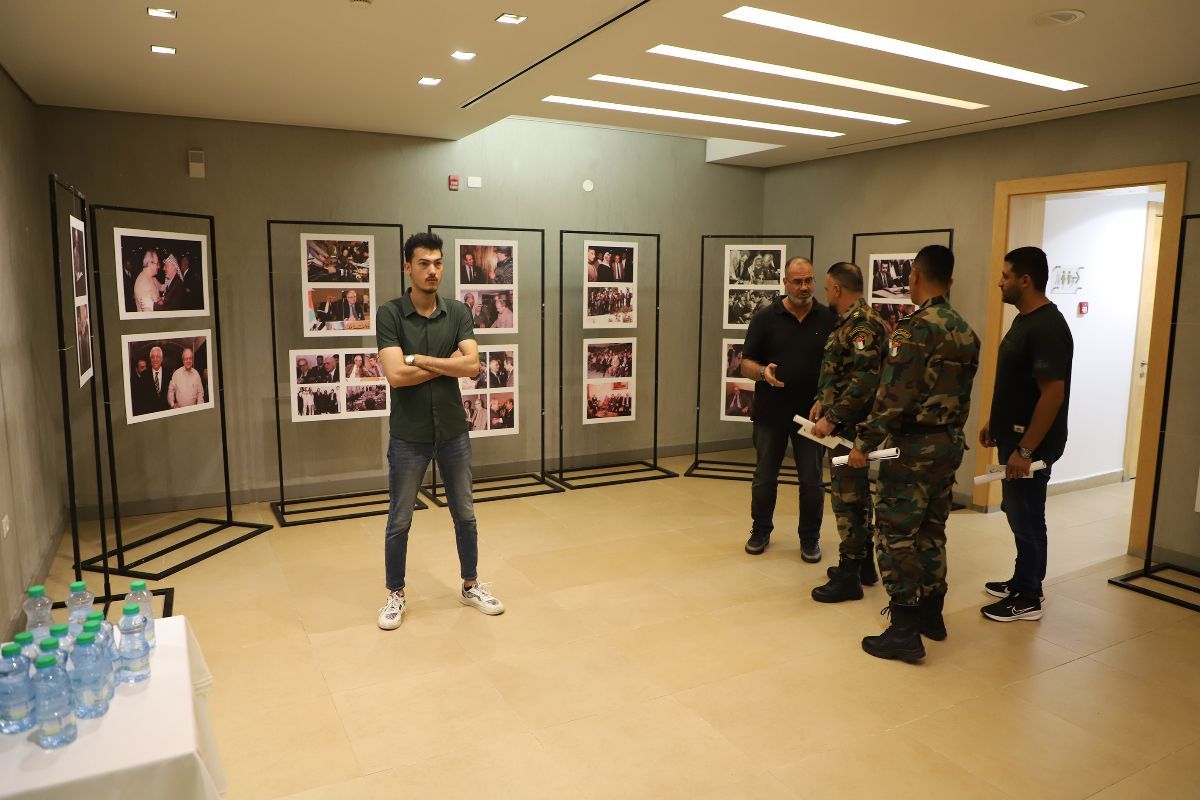
The event also featured the screening of a documentary film about Abu al-Lutf’s life, titled The Father of Palestinian Modern Diplomacy, along with a photo exhibition celebrating his contributions.
The commemoration was attended by members of the Executive Committee of the PLO, Fatah’s Central Committee, several ambassadors, and a large audience.